A pair of clear lenses may look protective, yet appearance alone says little about how eyewear responds to an unexpected impact. At a shooting range, the relevant question is not simply whether glasses cover the eyes, but whether their materials, construction, and stated protection characteristics match the surrounding risks.
Ballistic Shooting Glasses are designed around demanding protective applications, while ordinary eyewear may have a very different purpose. At YIJIA Optical, we treat impact resistance as one part of a broader discussion that also includes coverage, optical clarity, fit, and lens durability.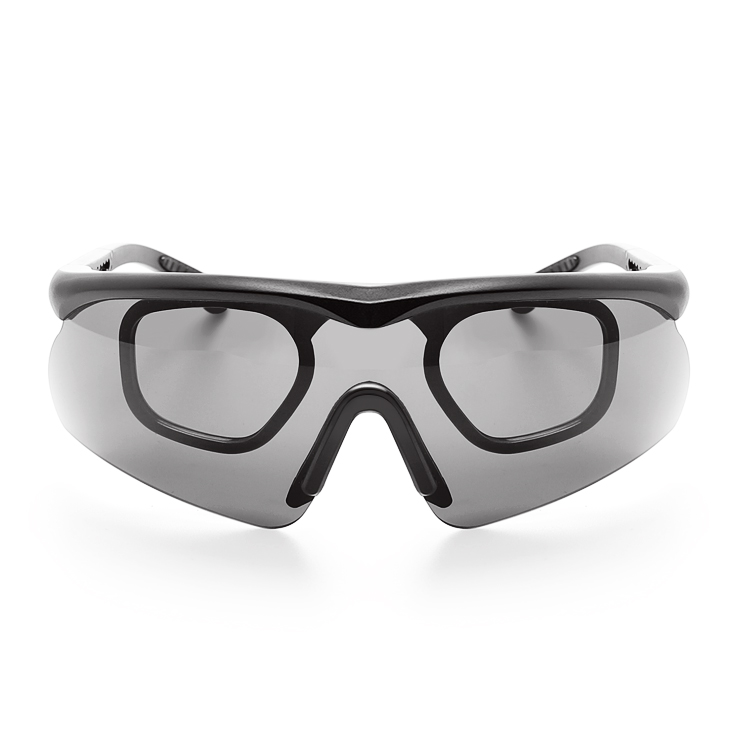
Impact resistance describes how a lens or protective structure responds to mechanical force. It should not be confused with scratch resistance, because these properties address different forms of damage. A lens may resist surface marks while having a different performance profile under impact.
The term safety glasses for shooting can cover a broad range of products, so specifications deserve close attention. Users should check the manufacturer's stated protection level and applicable testing information rather than assuming that every pair marketed for shooting offers the same degree of protection.
In the United States, ANSI Z87.1 sets the baseline for occupational eye protection, while MIL-PRF-32432A is the standard for military ballistic eyewear. For the most rigorous applications, products may also be evaluated against the MIL-STD-662F V50 ballistic limit test.
Material selection also affects performance. Polycarbonate is commonly used in protective eyewear because it combines relatively low weight with useful impact resistance. However, material alone does not define the protection of the finished product; lens thickness, frame construction, geometry, and testing all contribute to the result.
Lens thickness is one measurable part of eyewear construction, although a thicker lens does not automatically mean that a product provides a particular protection level. The complete design needs to be considered alongside the material and relevant testing requirements.
Our YL737 Tactical Shooting Goggles use a PC frame, PC lenses, and 2.0 mm lens thickness. The model features anti-scratch and impact-resistance characteristics and supports custom brand and logo services. These specifications provide a concrete example of how lens material, thickness, surface durability, and frame construction can be considered together in tactical eyewear.
Surface protection serves another purpose. Ballistic Shooting Glasses may encounter dust, handling marks, and repeated outdoor use, so scratch resistance can help preserve the usable condition of the lens. It should still be regarded separately from impact protection rather than treated as an indication of overall protective performance.
A protective lens can only cover the area included in its design. Side coverage, frame shape, and the distance between the lens and face can influence how much surrounding exposure remains.
Safety glasses for shooting should provide a practical field of view while maintaining appropriate eye coverage. Excessive frame obstruction can make it harder to observe the surrounding environment, whereas insufficient coverage may leave areas around the eyes more exposed.
Fit adds another dimension to the equation. A frame that shifts during movement may change the position of the lens relative to the eyes. Nose support, temple pressure, frame dimensions, and overall balance all contribute to stability, particularly during extended use.
Protection has limited practical value if the wearer cannot see comfortably through the lens. Distortion, scratches, poor transparency, or an unsuitable tint can affect visual perception even when the physical construction is robust.
Different environments call for different optical characteristics. Indoor ranges may have controlled lighting, while outdoor facilities can involve direct sunlight, changing weather, and reflective surroundings. Ballistic Shooting Glasses should consequently be evaluated according to the setting in which they will be worn rather than selected solely according to their appearance.
Prescription requirements introduce another consideration. Users who need vision correction may require compatible prescription solutions or protective designs that accommodate corrective eyewear. The available configuration should be confirmed before purchase, since ordinary prescription lenses and protective lenses serve different functions.
Start with the specifications rather than the product name. Look for clearly stated information about lens material, impact performance, thickness where relevant, optical characteristics, and other protective features. A vague description provides less useful information than documented specifications.
Safety glasses for shooting should also be checked for physical condition before use. Cracks, deep scratches, loose frames, or other visible damage can affect usability, and damaged protective eyewear should be replaced according to the manufacturer's guidance.
At YIJIA Optical, we consider protective eyewear as a combination of material selection, construction, optical performance, and application requirements. Ballistic Shooting Glasses can be appropriate for demanding environments when their documented specifications correspond to the intended use, but no single feature should be treated as a substitute for the others.
Impact resistance matters because shooting environments can involve hazards that ordinary eyewear was never designed to address, but the question does not end with the word “impact.” Lens material, thickness, frame construction, coverage, optical clarity, surface durability, and fit all contribute to how protective eyewear functions in practice.
We at YIJIA Optical approach tactical eyewear through these interconnected considerations, while safety glasses for shooting should always be selected according to documented performance and the conditions of use. A careful specification check offers a much more meaningful starting point than judging protection from appearance alone.

