A tactical goggle can look rugged without necessarily offering the optical and physical characteristics expected in demanding outdoor environments. Best military tactical goggles are better understood through measurable factors such as lens material, impact resistance, optical clarity, environmental protection, and frame construction rather than appearance alone.
At YIJIA Optical, we approach tactical eyewear from this practical perspective, examining how each component contributes to protection and usable vision in conditions where ordinary sunglasses may not be appropriate.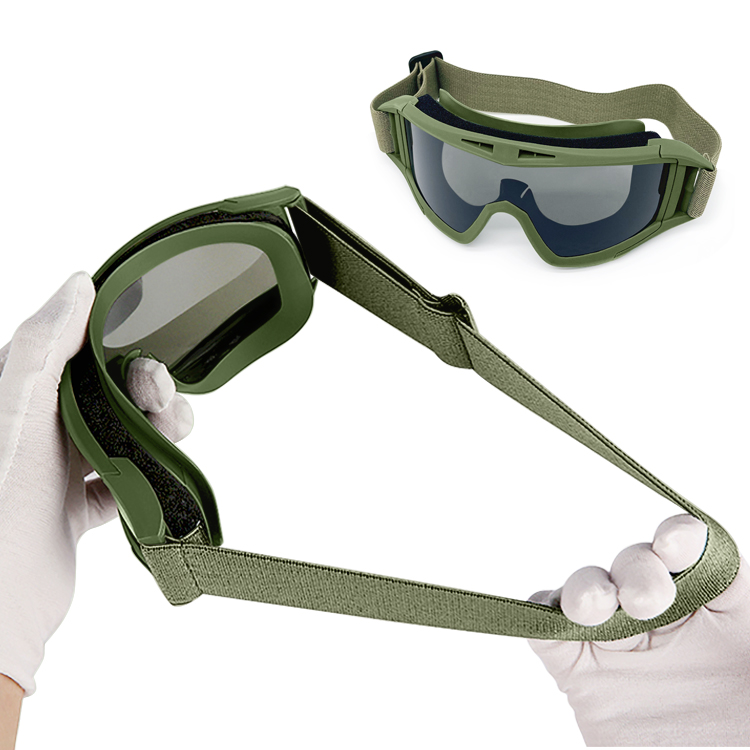
Impact Resistance Starts With Lens Material
The lens is the first barrier between the eyes and external hazards, so its material has a direct influence on protective performance. Polycarbonate is widely used in protective eyewear because it combines relatively low weight with strong resistance to impact. The exact performance of a finished goggle, however, depends on its construction and applicable testing requirements.
Thickness is another factor worth considering, but a thicker lens does not automatically describe the entire protective capability of an eyewear product. Lens geometry, material quality, frame retention, and manufacturing consistency all contribute to how the assembly responds to an impact.
A useful specification should also distinguish impact resistance from scratch resistance. The former concerns how the lens responds to physical force, while the latter relates to surface durability during handling and use. Anti-impact goggles should be assessed according to the intended application and any relevant testing or certification rather than through marketing terminology alone.
For U.S. markets, this typically means compliance with ANSI Z87.1 and MIL-PRF-32432A. For European procurement, the relevant standard is EN ISO 16321-1:2022. High-threat applications may also require MIL-STD-662F V50 ballistic testing to verify fragment resistance.
Optical Clarity Has a Tactical Role
Protection means little if the wearer cannot see the surrounding environment clearly. Optical clarity depends on lens quality, surface condition, curvature, and the way the lens interacts with light. Distortion around the peripheral field can become particularly noticeable during movement, so a broad and usable viewing area matters.
UV protection adds another layer of consideration for outdoor applications. Extended exposure to ultraviolet radiation can affect the eyes, making UV protection relevant for military-style training, shooting sports, field activities, and other environments with strong sunlight.
Anti-fog performance deserves separate attention because temperature differences, humidity, and physical exertion can quickly change the environment inside protective eyewear. A clear lens in a showroom does not necessarily remain clear during active use. Best military tactical goggles should be evaluated according to how optical features work together under realistic conditions.
Frame Design Supports More Than Fit
A protective lens requires a frame that can hold it securely while remaining comfortable during movement. TPU is one material used in tactical eyewear because it can provide flexibility while accommodating different frame designs. Facial contact areas also influence comfort, particularly during extended wear.
The relationship between the goggle and other equipment is equally important. Helmets, communication equipment, face coverings, and other protective gear can occupy the same area around the head. A frame that works well independently may require different geometry when used as part of a broader protective setup.
Material selection can also reflect environmental considerations. Our RK2 Wholesale Outdoor Sports Safety Protection Military Glasses Tactical Goggles uses a TPU frame and offers an eco-friendly, biodegradable material option, while its reinforced PC HD lens provides UV400, anti-scratch, impact-resistant, and anti-fogging functions. The available military green, black, and khaki colors, together with a 300-piece MOQ, make the model suitable for customized wholesale programs.
How Environmental Conditions Change Requirements
Outdoor tactical eyewear may encounter dust, moisture, strong sunlight, cold temperatures, and sudden changes in activity. Each condition creates a different demand on the lens and frame. Anti-fogging becomes particularly relevant during exertion, while surface durability matters when the goggles are frequently handled or transported.
Color and light transmission also influence how the wearer perceives the environment. Darker lenses may be more appropriate in strong light, while other optical configurations can be considered for lower-light conditions. The right selection depends on the environment rather than the label attached to the eyewear.
For products intended for professional or organized applications, documentation deserves attention as well. Specifications should clearly state lens material, protective functions, available materials, customization options, and any applicable certifications. Such information gives purchasers a more concrete basis for comparing anti-impact goggles than appearance or general product descriptions.
What Should Be Checked Before Selection?
A sensible evaluation begins with the intended activity. Shooting sports, airsoft, outdoor training, field operations, and industrial environments can expose eyewear to different combinations of impact, dust, moisture, and light. The protective specification should match the actual risk rather than relying on a generic tactical appearance.
Fit comes next. A secure frame position, appropriate facial contact, compatibility with other equipment, and comfortable long-duration wear can all affect whether protective eyewear remains useful during movement. Even strong lenses become less practical if the goggle shifts or causes excessive pressure.
Customization adds another consideration for wholesale projects. Best military tactical goggles may involve different lens treatments, frame materials, colors, logos, packaging, or production quantities depending on the target market. At YIJIA Optical, we examine these specifications as part of the product development process instead of treating customization as a purely cosmetic change.
Conclusion
There is no single visual feature that makes tactical eyewear suitable for demanding use. Lens material, impact resistance, optical clarity, UV protection, anti-fog performance, frame construction, fit, and environmental requirements all contribute to the final specification.
Our approach at YIJIA Optical is to connect those characteristics with the intended application, giving anti-impact goggles a clearer technical meaning than a rugged-looking frame alone. With the same perspective, best military tactical goggles should be judged through documented specifications and practical requirements, while YIJIA Optical can support customized configurations built around those defined needs.

